
Noise Optimisation
Noise in windPRO 4.3
Meet noise limits. Protect energy yield. Model it with confidence.
windPRO 4.3 brings a smarter noise curtailment optimiser, support for non-turbine noise sources, the revised ISO 9613-2:2024 propagation model, and deeper German and French regulatory coverage – all in one workflow.
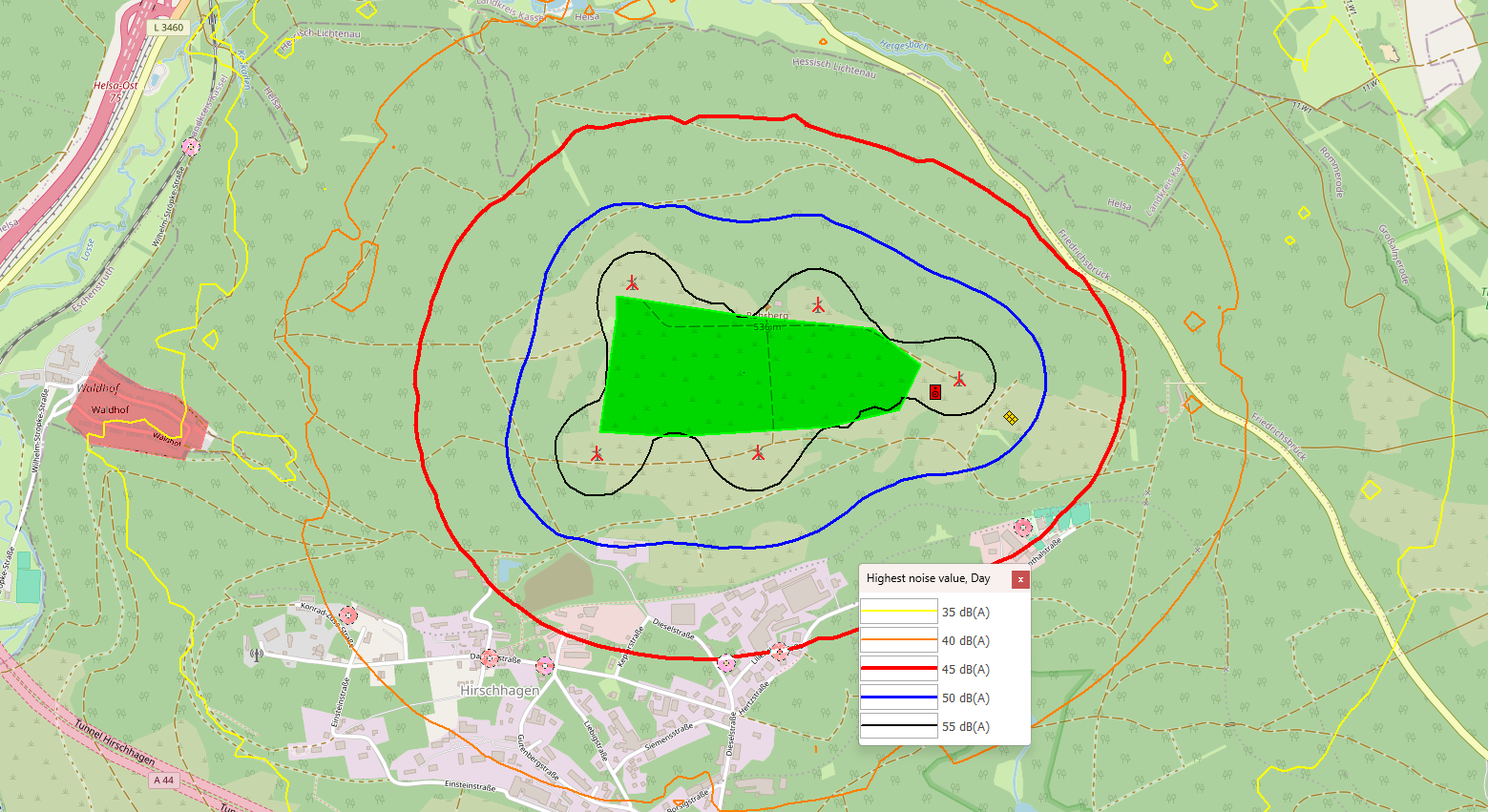
Your challenge, windPRO's job
Noise compliance is one of the tightest constraints on a wind farm layout – and one of the most expensive to get wrong. Curtail too conservatively and you give away energy production you didn't need to; curtail too little, or model it inaccurately, and a project risks failing to comply, losing time in permitting, or facing costly rework after the fact.
The difficulty compounds with scale and geography: sites increasingly combine turbines with batteries, substations, and PV inverters that add their own noise, and each market has its own rules for how noise must be modelled and reported – Germany and France in particular ask for calculations most general-purpose tools weren't built to produce.
The risk of getting it wrong:
Blanket, worst-case curtailment plans that cost far more energy yield than the site's actual noise limits require.
Non-turbine noise sources (batteries, substations, PV inverters) left out of the picture, understating a site's real noise footprint.
Calculations that don't meet a specific market's regulatory format – slowing down or jeopardising permitting in Germany and France.
What's new for noise in windPRO
1. Noise curtailment optimisation
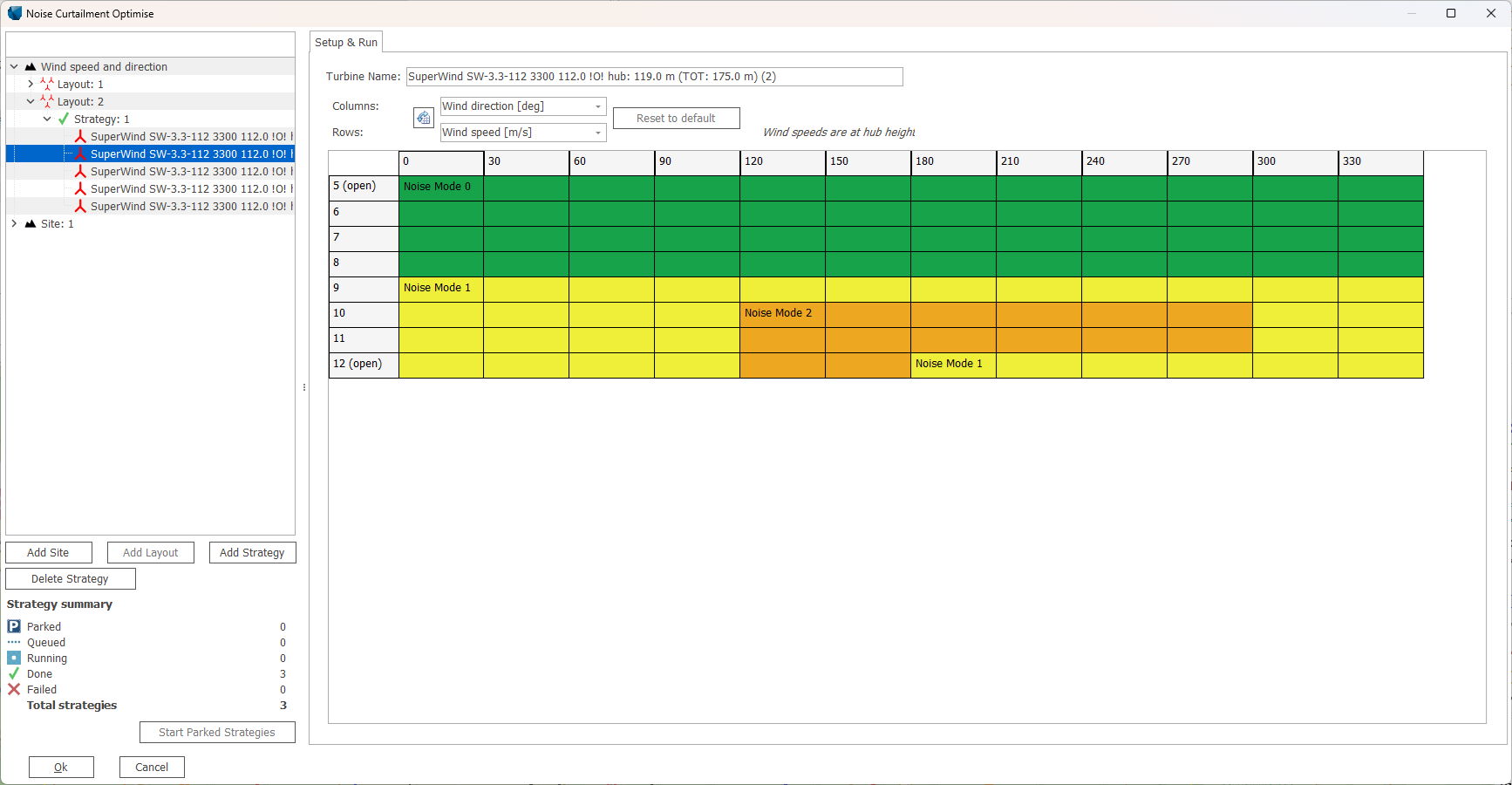
Instead of applying a uniform curtailment scheme and hoping it holds up, the noise curtailment optimiser suggests a plan that complies with your noise threshold while minimising production loss. It works with either the ISO 9613-2:2024 or NORD2000 propagation model, and supports most of the same features as the full DECIBEL and NORD2000 calculations — screening, area of influence, and external noise sources included.
A unique step model helps the optimiser find the best achievable solution rather than settling on a local maximum. Optimisation can run across multiple dimensions at once – time, wind speed, wind direction, temperature, and humidity – and the result is an operation plan you can hand straight to the turbine controller.
2. Non-wind turbine noise sources
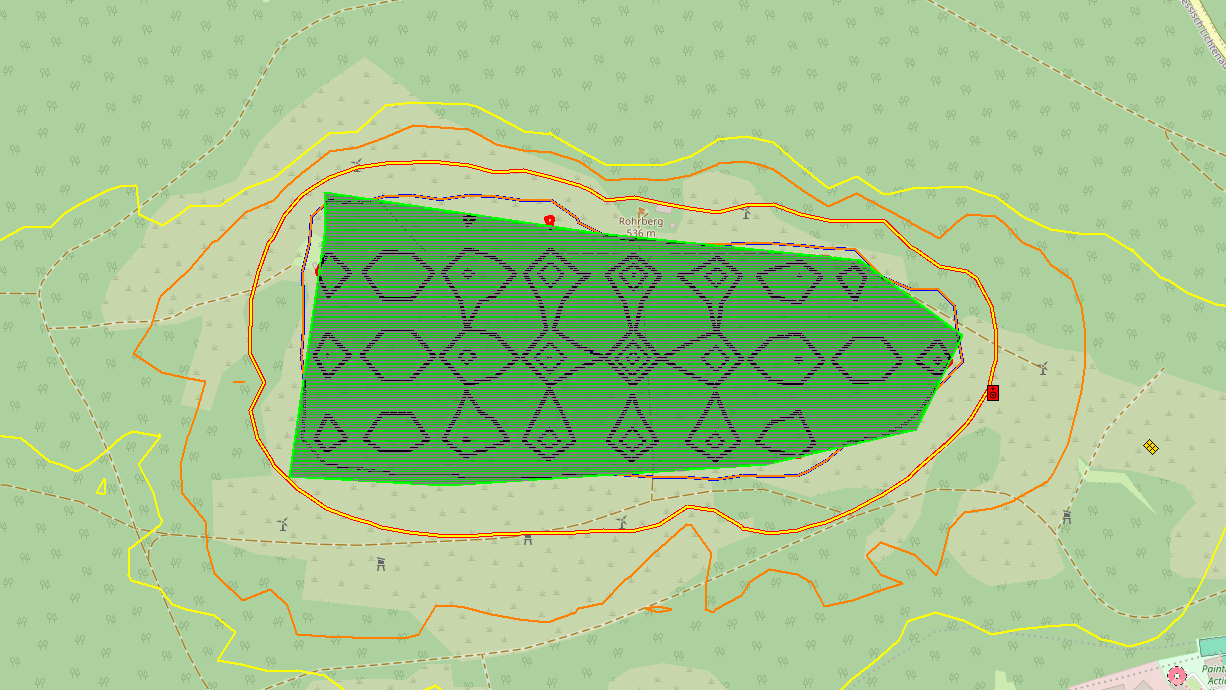
Noise calculations can now include sources beyond the turbines themselves – batteries, substations, or PV inverters.
windPRO lets you build a catalogue of these sources, and includes generic noise data for PV inverters out of the box.
They can be modelled alongside turbine noise, or – under the German setup – used to establish the existing noise level before a new project is added. Noise emitters can be modelled as either single point sources or, for cases like PV inverters, distributed sources.
3. ISO 9613-2:2024
windPRO now implements the revised ISO 9613-2 propagation model, including the updated terrain and structure screening from the 2024 edition — with the 1996 edition still available where it remains the applicable standard.
The implementation supports wind direction attenuation, using either the ISO standard's own approach or the UK Institute of Acoustics' Good Practice Guide, and calculates air absorption per ISO 9613-1 from temperature and humidity.
Calculations can run on 10 m wind speed or hub-height wind speed – or, for results closer to real-world conditions, windPRO can run ISO 9613-2 (or NORD2000) against specific wind-climate cases that account for how terrain and wake vary wind speed across the farm.
4. Adaptation to German noise regulation
Over the last two windPRO versions, German noise regulation support has been built out substantially:
Terrain and structure screening, in both the 1996 and 2024 editions.
Printouts that separate preload, new load, and total load.
TA-Lärm criteria for area of influence – which preload and new-load sources must be included at each receptor
TA-Lärm criteria for handling receptors with a large preload impact.
Time-domain calculation with separate day and night results, including night-only curtailment.
Specification and inclusion of external noise sources inside or outside the project — batteries, heat pumps, PV plants.
A separate propagation model for low-noise sources, used alongside the interim model for tall turbines.
4. Adaptation to French noise regulation
windPRO is increasingly built to support noise calculation and layout design under French requirements:
Calculations split across time periods within the day (day/night, or day/evening/night), which also feeds into yield calculation.
Ambient noise by time period, referenced to wind speed at a specific reference position.
Curtailment design with detailed turbine control by wind speed, wind direction, and time.
Climatic scenarios that account for differences in wind speed – and therefore noise level – across individual turbines due to terrain and wake.
Why it matters for your project
Reduce risk, protect production, and meet market-specific noise requirements with greater confidence.
Keep more of the energy you're entitled to
A curtailment plan built by the optimiser – not a flat, conservative rule – means you comply with the noise limit while giving away as little production as possible.
See the full noise picture, not just the turbines
As sites increasingly pair turbines with batteries, substations, and PV, leaving those sources out of the calculation understates real-world noise. Building them into the model from the start avoids surprises later in permitting or operation.
Model closer to how the site actually behaves
Running the propagation model against specific wind-climate cases – rather than a single flat wind speed – accounts for how terrain and wake really change noise across a farm, in both the ISO 9613-2:2024 and NORD2000 workflows.
Work confidently in Germany and France without switching tools
Purpose-built support for TA-Lärm criteria and French time-period/curtailment requirements means you're not adapting a generic calculation to fit a market – the market's own logic is already built in.
The modules you need
Key modules for Noise Optimisation
Environment Modules
Assess noise, flicker, glare, and visual impact, including the DECIBEL and NORD2000 noise calculations, non-turbine noise sources, and country-specific setups for Germany and France.
→ Get started
Try windPRO
Download the free trial.
Learn the tool
Sign up to one of our courses.
Talk to an expert
Contact us for windPRO noise optimisation in your country.