Case Study 2: Existing turbines with limited life left
Can new turbines still be approved?
A low design class neighbour park, a turbine with only 7.1 years of fatigue life left, and a layout under pressure. How windPRO found a solution and simplified it to 15 curtailment rules.
The situation
Following the initial optimisation study (see Case Study 1), the project team obtained real data on the four existing turbines at the site. What they found raised the stakes considerably. Rather than the IIB design class assumed in the baseline analysis, the existing turbines were built to lower standards - IIC and IIA - with between 16 and 19 years of fatigue life remaining.
A lower design class means less tolerance for turbulence. Adding seven new turbines to the site would increase wake-induced loading on these machines significantly. The central question became unavoidable:
Can the planned turbines even be installed at all?
To answer it, the team incorporated the existing turbines' actual specifications into the lifetime optimisation - giving a much more accurate picture of what the new layout would mean for the whole park.
The approach
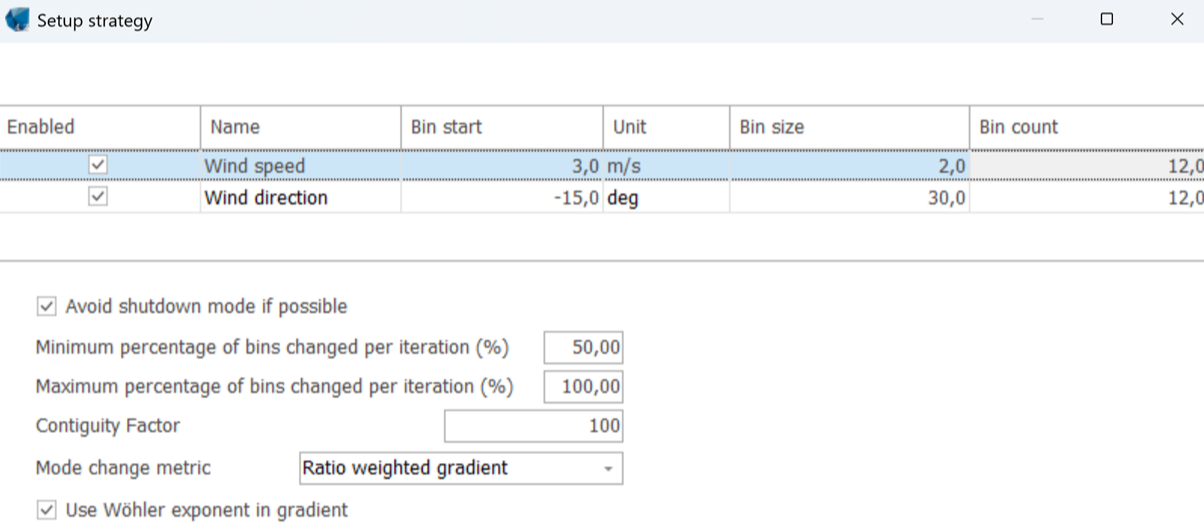
The optimisation parameters for the new turbines remained unchanged from Case Study 1: design class IA, 20-year target lifetime, IEC-standard binning across wind speed and direction. What changed was the input data for the existing turbines.
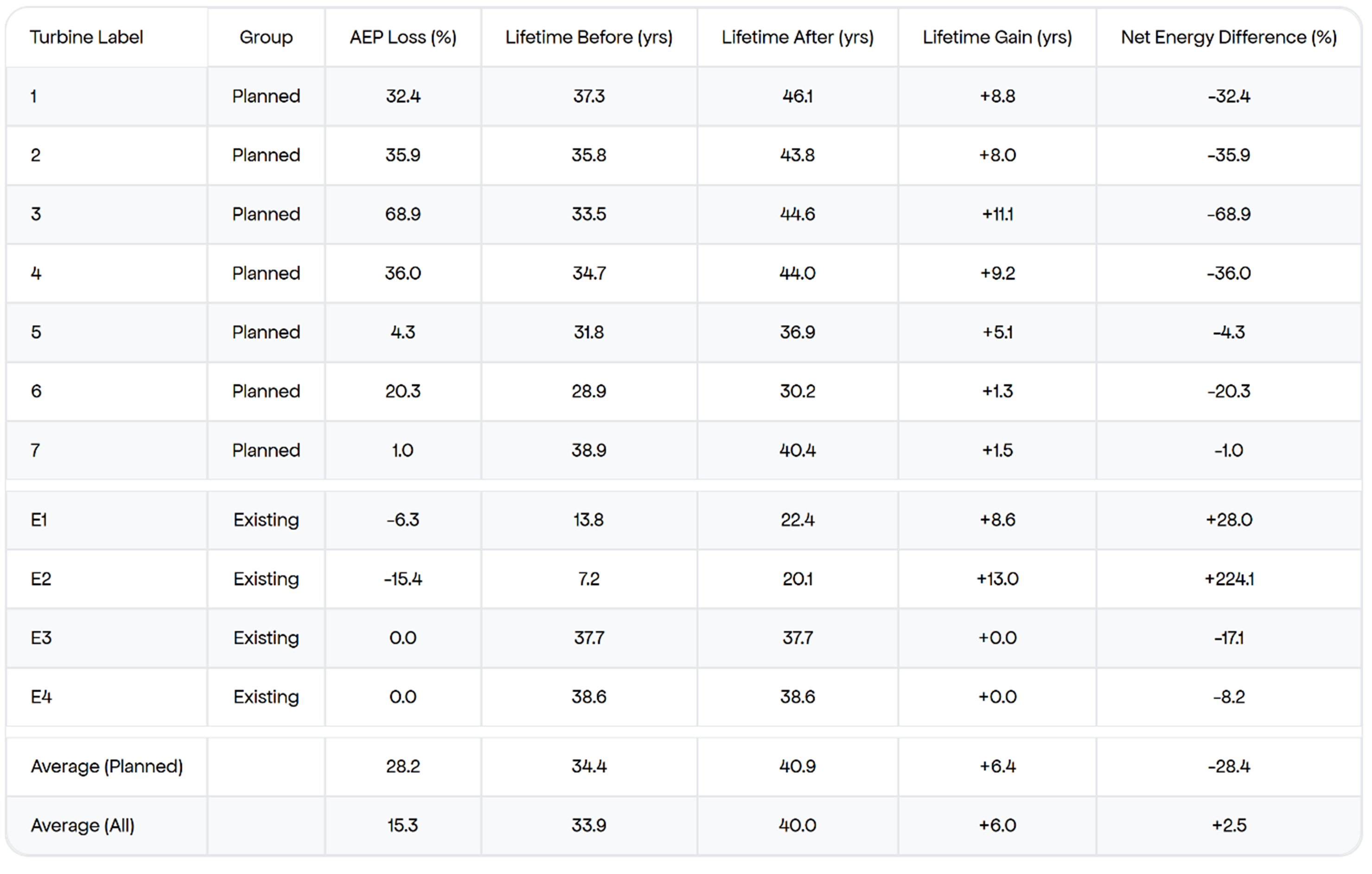
The table below shows what the team was working with:
The IIC design class of turbines E1 and E2 is the core problem. These machines were not built to handle high turbulence loads. In their current position, relative to the planned new turbines, they would be exposed to significant additional wake loading - far beyond what their design class was intended to withstand.
The discovery: E2 has 7.1 years left
The optimisation revealed the extent of the problem immediately. Without curtailment, turbine E2 - already the weakest machine on site - was projected to have just 7.1 years of fatigue life remaining once the new turbines were operational.
Its IIC design class made it particularly vulnerable to wake turbulence from the planned machines nearby.
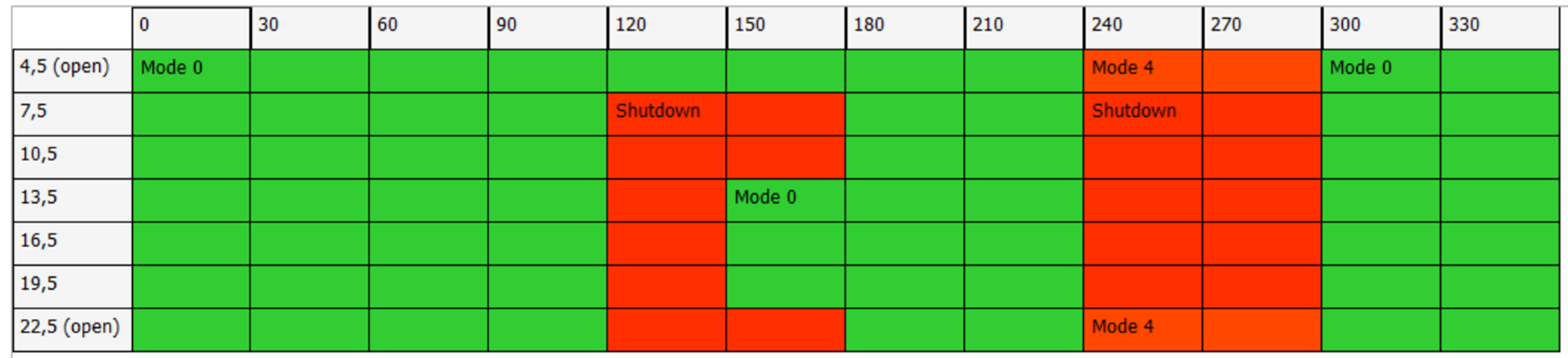
To extend E2's life to an acceptable level, the Optimizer determined that frequent shutdowns would be required across a wide range of wind conditions - limiting the turbulence it experiences from neighbouring machines.
E2 projected fatigue life (no curtailment)
7.1 years
Down from 19 years remaining - driven by wake turbulence from the new turbines and its low IIC design class.
Average AEP loss across all turbines
22%
The shutdowns needed to protect E2 cascade across the park, with new turbines bearing up to 38% AEP loss individually.
Surprisingly, a solution exists
Despite E2's low design class and the cascading shutdowns required, the Lifetime Optimizer was able to find a curtailment scheme that brings all turbines within acceptable fatigue limits - meaning the new turbines can be approved for installation, even within the highly restricted area.
The next problem: too complex to implement
The turbine manufacturer reviewed the optimised curtailment matrices and raised a practical objection: the original scheme involved too many decision points to implement reliably in the field. Each matrix contained a large number of wind speed and direction combinations, each with a different curtailment response. For a real wind farm control system, this level of granularity is unmanageable.
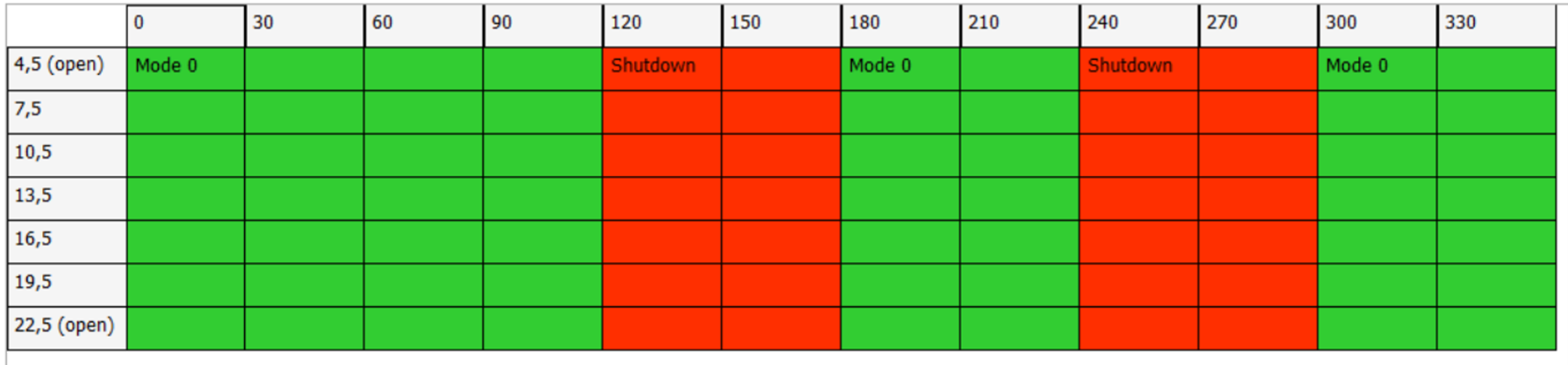
The Optimizer was re-run with two adjustments: higher thresholds for triggering curtailment, and a penalty for non-contiguous curtailment rules (favouring schemes that group conditions into broader, simpler blocks). This came at a cost of an additional 2.5% AEP loss - but the result was dramatically simpler.
What 15 rules looks like in practice
Each rule defines a wind speed range and direction sector that triggers a specific turbine response. For example:
The outcome
The new turbines received approval for installation. Despite a constrained site, low design class existing turbines, and a neighbour park that had almost eliminated any available fatigue margin for E2.
The total AEP loss under the final simplified scheme is higher than Case Study 1 - a direct consequence of the existing turbines' vulnerability.
But the alternative was no installation at all. The Optimizer did not just find a theoretical solution; it found one that could actually be handed to a turbine manufacturer and implemented.
What 15 rules looks like in practice
Each rule defines a wind speed range and direction sector that triggers a specific turbine response. For example:
Key takeaways
Low design class existing turbines (IIC) can become the binding constraint for a new project - even if the new turbines are designed to a higher standard
Without curtailment, turbine E2's fatigue life dropped from 19 years to just 7.1 years once new turbine wakes were accounted for
The Optimizer found a valid solution even in this highly constrained scenario - enabling project approval
A second optimisation pass simplified the scheme from an unmanageable number of rules to just 15 at a cost of only +2.5% additional AEP loss
Optimised curtailment is not just a fatigue tool - it is a project approval tool
Previous case study
Constrained layout, 20-year lifetime
How optimised curtailment delivered a net +13.6% lifetime energy gain on the same site and why annual AEP loss is the wrong metric to evaluate curtailment.
The modules you need
Your windPRO Training Hub
Dive into our comprehensive courses, webinars, and tutorials to master windPRO’s powerful features. Whether you’re a beginner or looking to refine your skills, our resources will help you unlock the full potential of your wind projects. Start learning today!
Courses relevant for this use case
- Introduction to windPRO
- Advanced Wind Resource Assessment