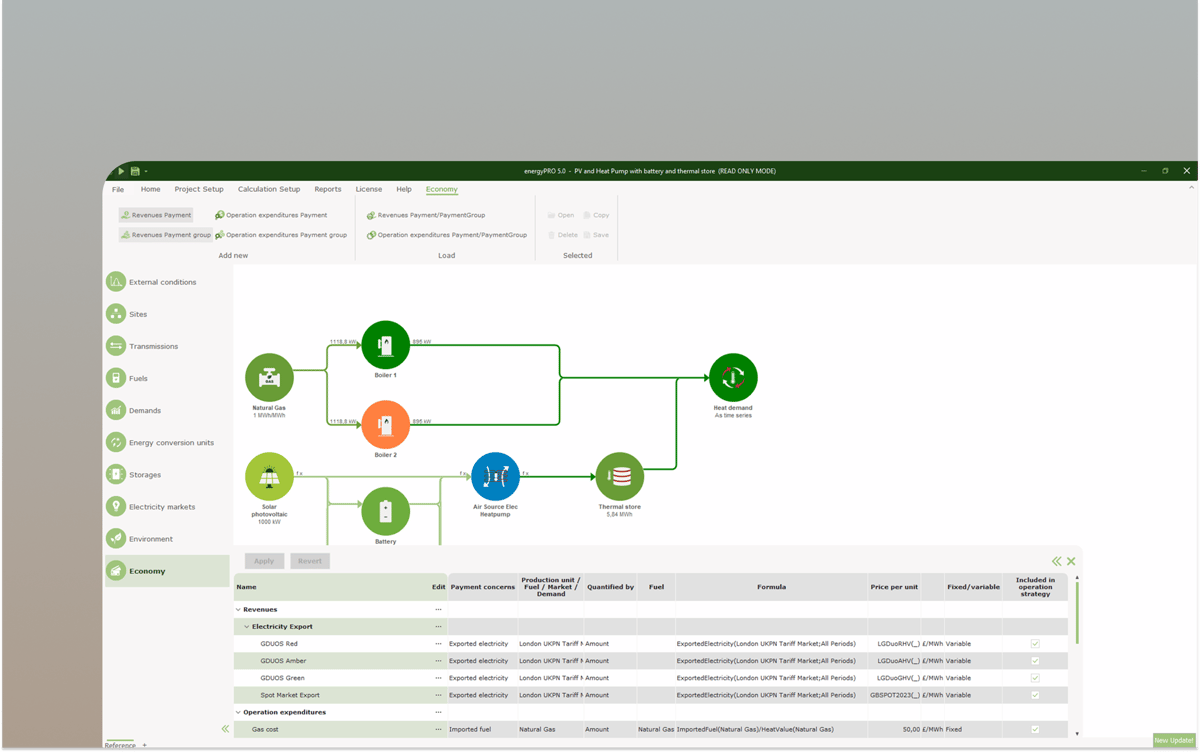
This case study was created with energyPRO. Download it now to start implementing BESS in your project.

Case study: BESS for industrial application in India
About this case study
In this example, we modelled a hybrid power system for a factory in India with a flat, 24/7 demand of 25 MW. The system includes on-site wind and solar generation, with energyPRO using real 2024 Indian spot market prices. To find the best investment strategy, we used the COMPARE module to analyse three distinct scenarios:
-
Reference Scenario: The baseline case with only wind and solar generation, relying heavily on the grid to meet the factory’s demand.
-
60 MWh BESS (guess): A scenario with a manually estimated 60 MWh battery added to the system.
-
134 MWh BESS (optimised): The optimal scenario where energyPRO’s OPTIMIZE module determined the most financially viable battery size is 134 MWh, based on a 10-year lifetime, 3% interest rate, and an investment cost of 12,000,000 INR/MWh.
.png?width=1920&height=1080&name=pictures%20(7).png)
Results: A clear case for optimised storage
The analysis clearly demonstrates the power of data-driven optimisation. The addition of a BESS significantly improves the system’s performance and financial returns, with the optimised battery delivering the highest value.
.png?width=1970&height=1321&name=image%20(11).png)
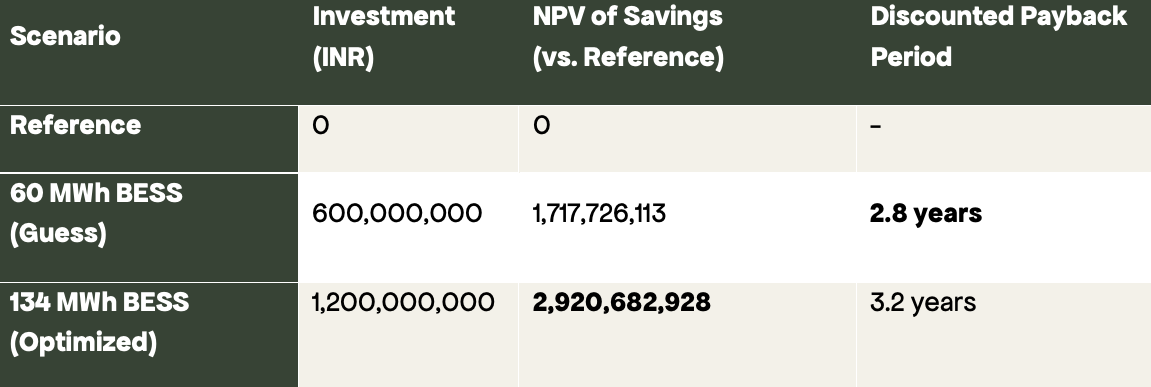
The financial analysis shows that while both battery scenarios are profitable, the 134 MWh optimised battery delivers a significantly higher Net Present Value (NPV) of savings over 10 years, making it the superior long-term investment.
Improved energy mix and utilisation factors
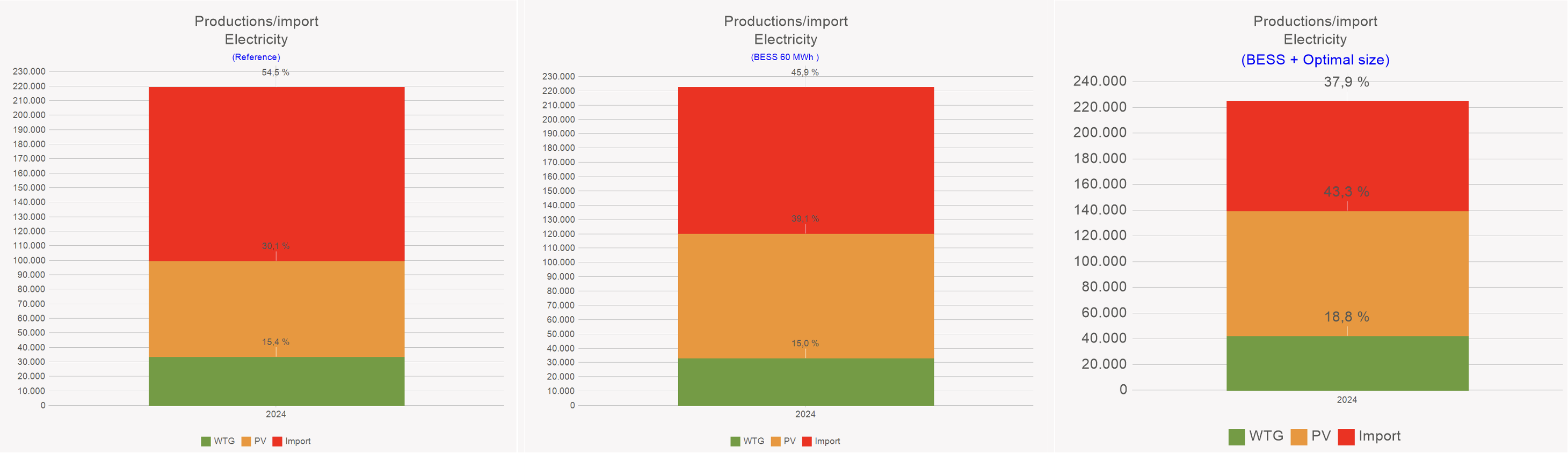
The BESS enables the factory to significantly reduce its reliance on expensive grid imports by storing cheap renewable energy and discharging it during high-price periods. The optimised 134 MWh battery reduces grid imports by 28.7% compared to the reference case.
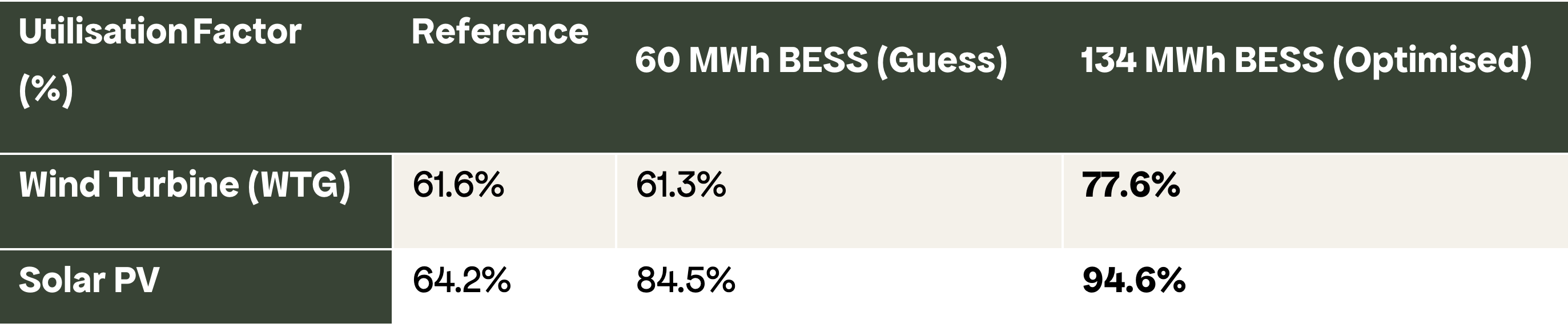
Adding a battery dramatically increases the utilisation of the on-site renewable assets, ensuring less energy is curtailed and more is used to meet the factory’s demand. The PV utilisation factor, for example, jumps from 64.2% to 94.6% in the optimised scenario.
The optimised battery delivers the highest net present value, reduces grid imports by nearly 30%, and maximises renewable energy utilisation - demonstrating the clear advantage of data-driven sizing over guesswork.
Other BESS case studies
Discover other case studies modelled in energyPRO
1. Renewable project with limited grid connection
This scenario investigates an existing 100 MW wind farm with a grid export limit of 100 MW. Using energyPRO, the system is incrementally expanded to evaluate value creation through hybridisation and storage.
2. Hybrid energy system with multi-market BESS operation
A hybrid system consisting of wind and solar generation, both modelled using output time series derived from windPRO energy yield calculations.