energyPRO 5.1 Beta
Welcome to the energyPRO 5.1 Beta
We are thrilled to give you early access to energyPRO 5.1. This version represents a fundamental shift in how the software handles data, moving beyond fixed categories to a fully flexible, resource-based architecture.
As a beta tester, your feedback is invaluable. We invite you to explore these new features, stress-test the generalised data structures, and help us ensure energyPRO remains the industry leader in energy project modelling.
We encourage you to try out the beta and let us know what you think at: [email protected]
More flexibility

While energyPRO 5.0 focused on modernising the interface, version 5.1 revolutionises the underlying data structure. We have moved towards a fully generalised system where all energy types - including markets, demands, conversion units, and storages - are handled with equal versatility.

UI & reporting enhancements
Distribution Bars
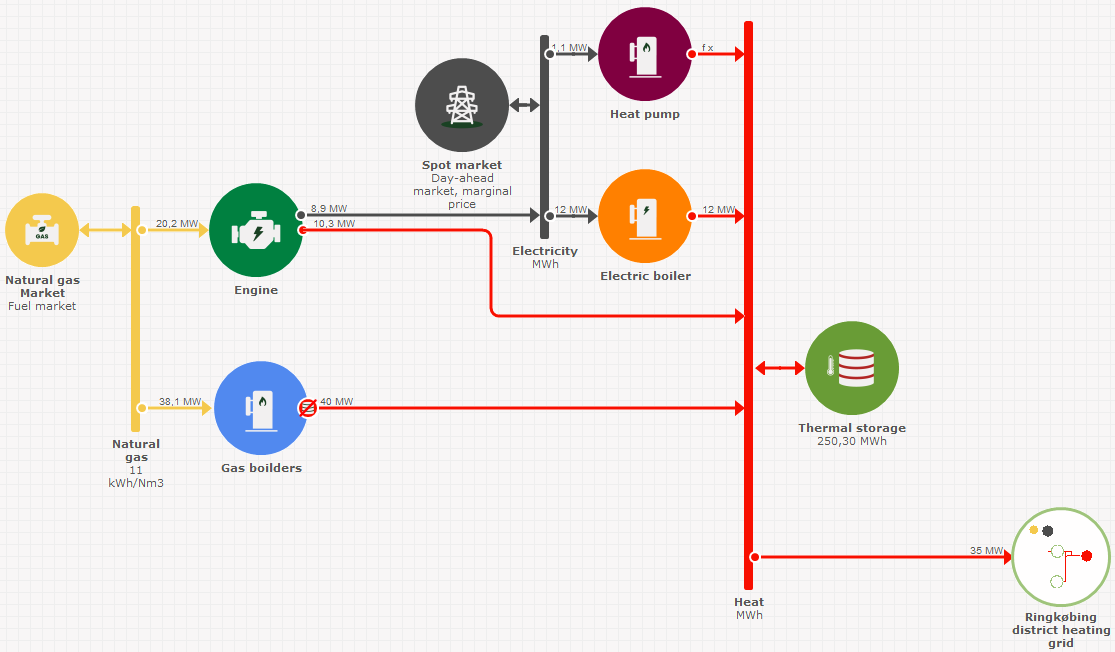
A new graphical feature acting as a central bus-bar, visually connecting all inputs and outputs from conversion units, demands, and storages.
Updated Reports
Clean, targeted updates to reporting reflect the new generalised data structure for better clarity and professional presentation.
From Energy Types to "Resources"
The traditional categories of heat, electricity, cooling,and fuels have been replaced by a universal Resources system.
- Infinite Variety: Define any resource, from natural gas and water to methanol or heat at specific temperatures.
- Seamless Migration: Files from version 5.0 automatically convert original energy types into the new resource format.
- Enhanced Units: Access more measuring units and customize resource settings via the intuitive left-side menu.

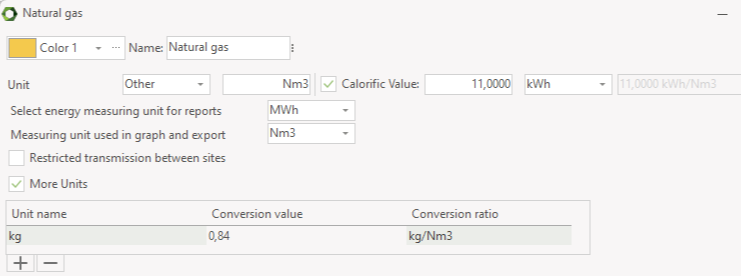
In the graphical user interface, you can access the resource by double-clicking its connection or distribution bar.
Transmissions and sites
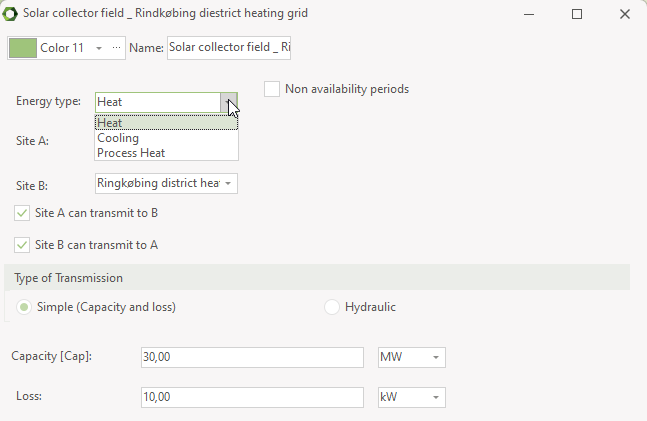
The new generalised structure allows for restricted transmission of any resource type.
- Hydraulic Calculations: Support for multiple thermal flow-based systems.
- Flexible Routing: Easily switch between standard and hydraulic settings on transmissions between sites to ensure precise modelling.
Universal demands & conversion
Demands
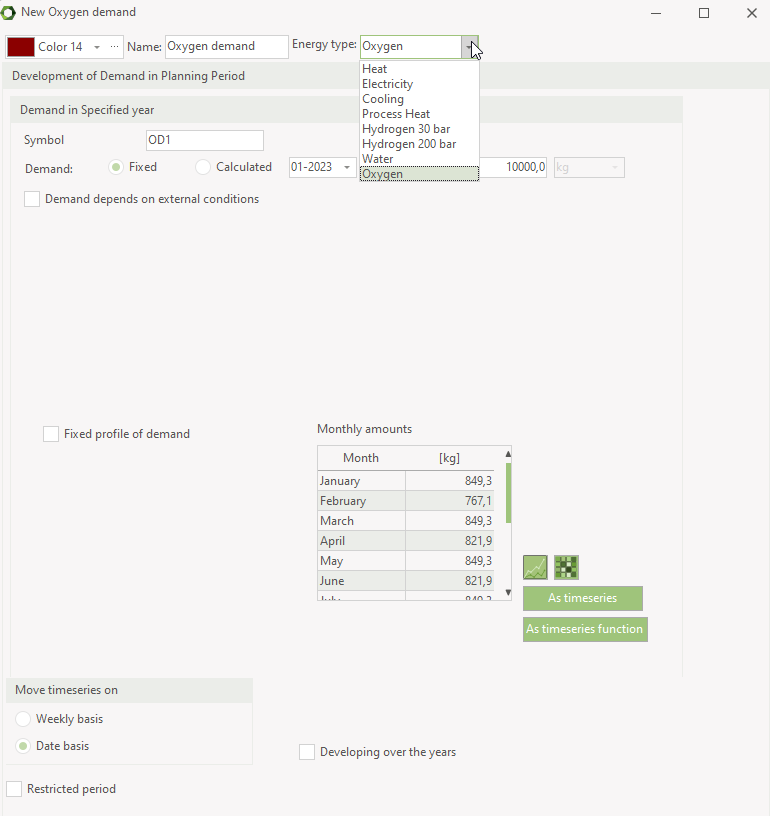
It is now possible to specify a demand for any resource type, including fuels. You can change the resource type on the demand.
Conversion units
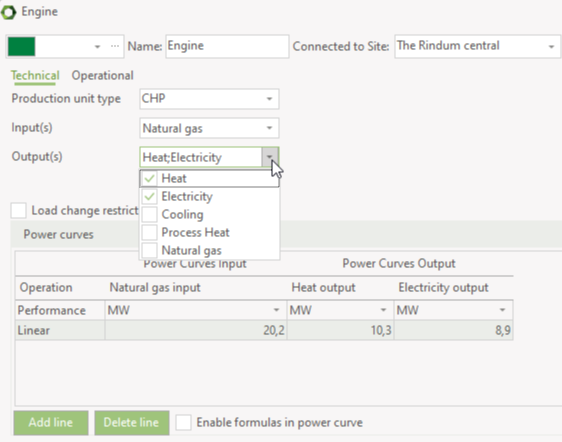
In the conversion units, you can choose from predefined conversion units and select the input and output types from the included resources.
Overhauled storage management
The storage has undergone a major functional upgrade:
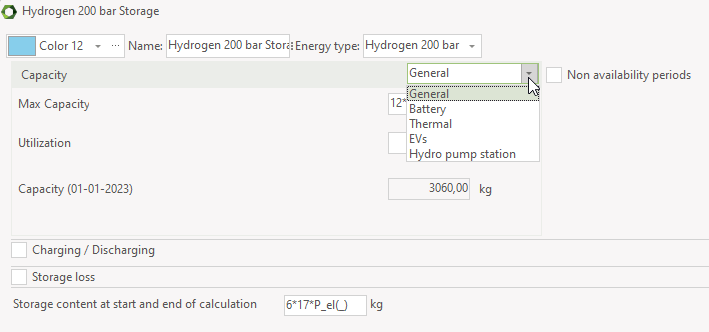
- Standalone Fuel Storage: Fuel storage is no longer nested within fuel definitions; it is now a standalone component, allowing for multiple storages of the same fuel type.
- Cross-Resource Capability: Toggle between thermal and electrical storage types for any resource.
- New Restrictions: Include charging/discharging restrictions on thermal units and account for losses in electrical storage.
Smarter markets
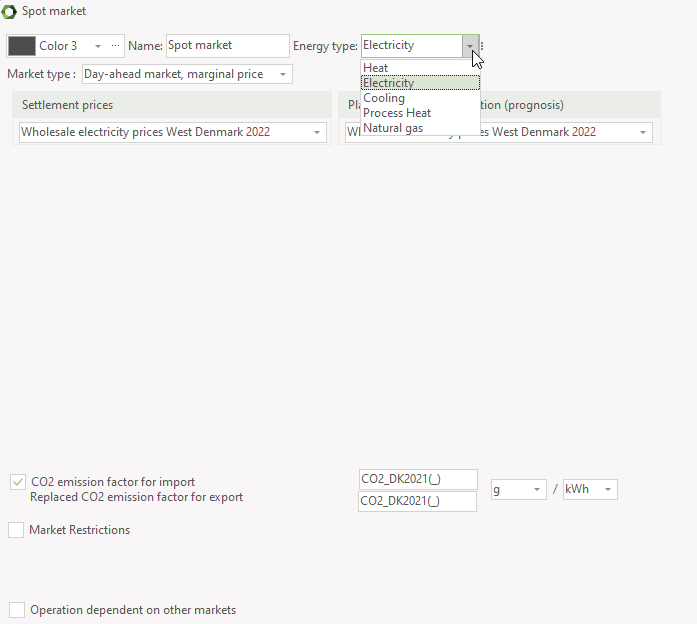
Create markets for any type of resource, such as electricity, heat, or natural gas. If a market for a specific resource (for example, natural gas) is not defined, that resource cannot be imported.
Markets also enable the export of resources, including electricity, heat, methanol, and more.
For each market, you can define grid restrictions and CO₂ parameters for both import and export. The grid restriction feature replaces the fuel availability settings used in energyPRO 5.0 and earlier versions.
With the MARKETS module, you can set up multiple markets for the same resource - such as a day-ahead market and a balancing market - allowing units like CHP plants to export to the most suitable market at any time.
Simplified economics
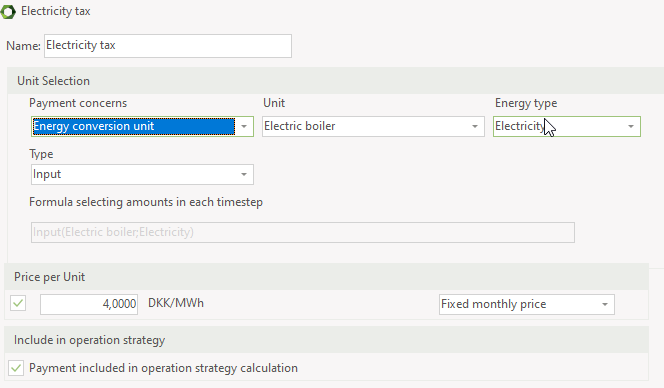
With the generalised energy types and resources introduced in energyPRO 5.1, payment modelling has been simplified and unified. Instead of using unit-specific payment definitions like HP(CHP) or FC(Boiler 1; Natural gas), all payments now follow a clear, consistent structure.
You simply define payments based on resource flows - for example, Output(CHP; heat) or Input(Boiler 1; natural gas) - making economic modelling more intuitive, transparent, and flexible.