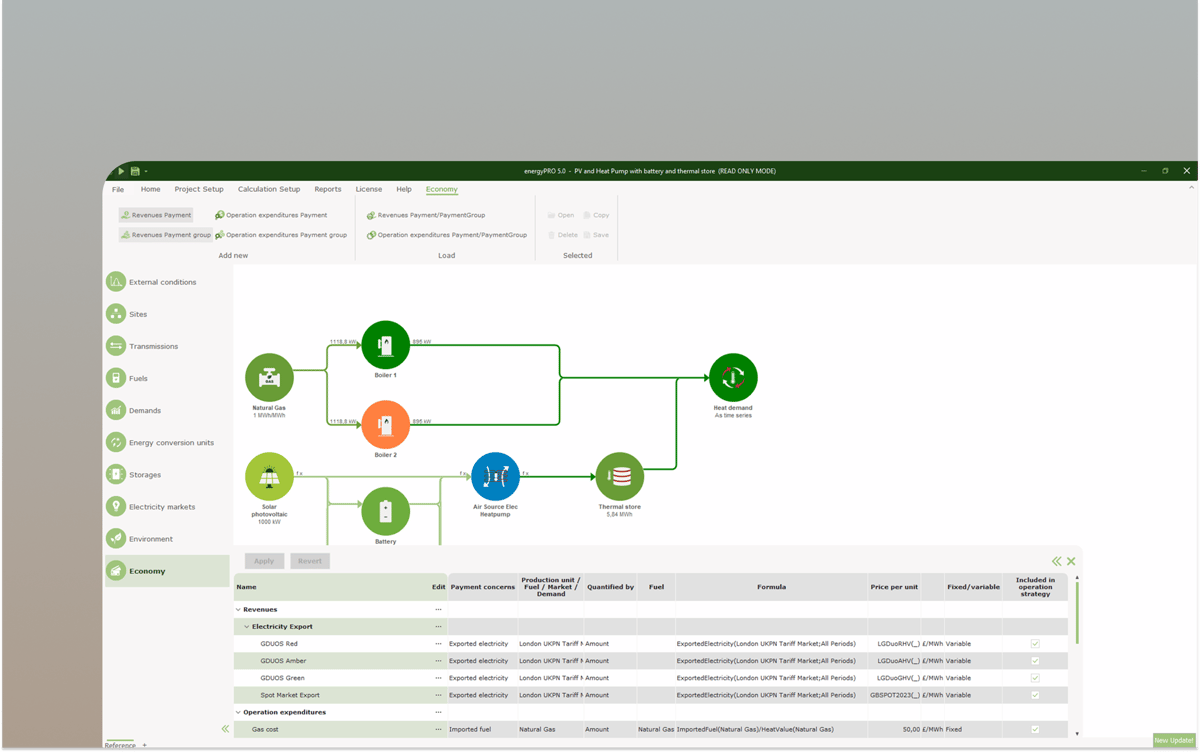
This case study was created with energyPRO. Download it now to start implementing BESS in your project.

Case study: Hybrid energy system with multi-market BESS operation
About this case study
In this example, we begin with a hybrid system consisting of wind and solar generation, both modelled using output time series derived from windPRO energy yield calculations.
A BESS is then added in energyPRO to evaluate and compare system performance when participating solely in the Day‑ahead market versus participating in both the Day‑ahead and Balancing market.
With energyPRO 5.1, integrating multiple electricity markets has become even more straightforward. Please note that the results presented here assume full knowledge of future prices in both markets, representing a best‑case theoretical scenario.
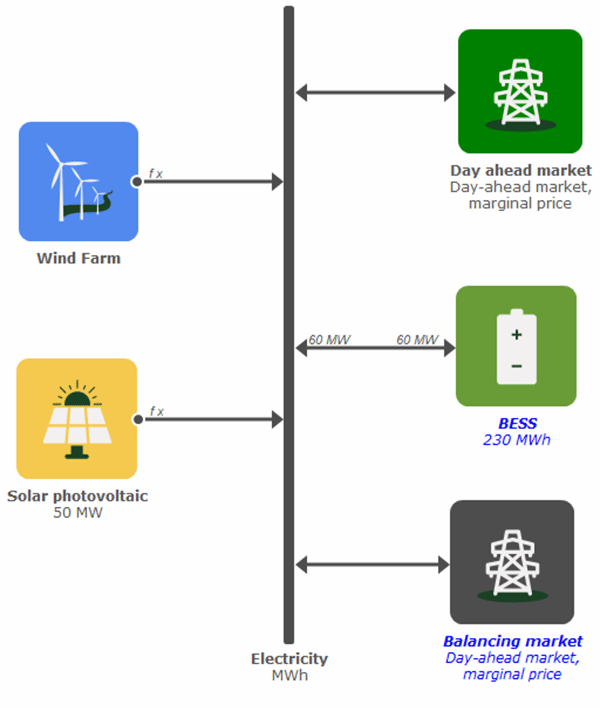
energyPRO is used to
1. Optimising BESS capacity based on Danish market prices.
2. Simulating hour-by-hour dispatch decisions.
3. Quantifying revenue stacking from multiple markets.
Results
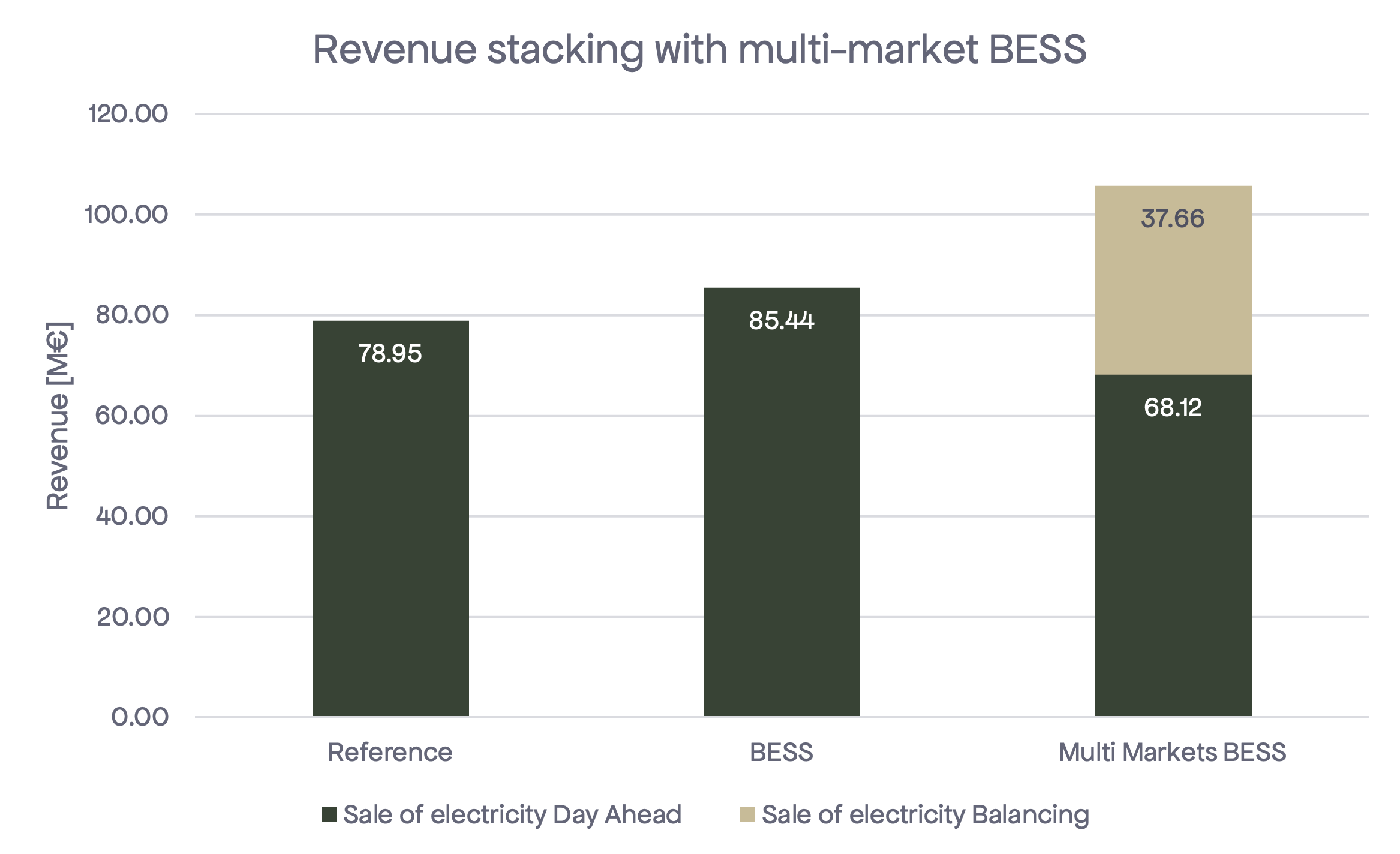
The results show a significant increase in annual revenue and a payback time close to one year when multi-market participation is enabled - highlighting the importance of integrated operational optimisation.

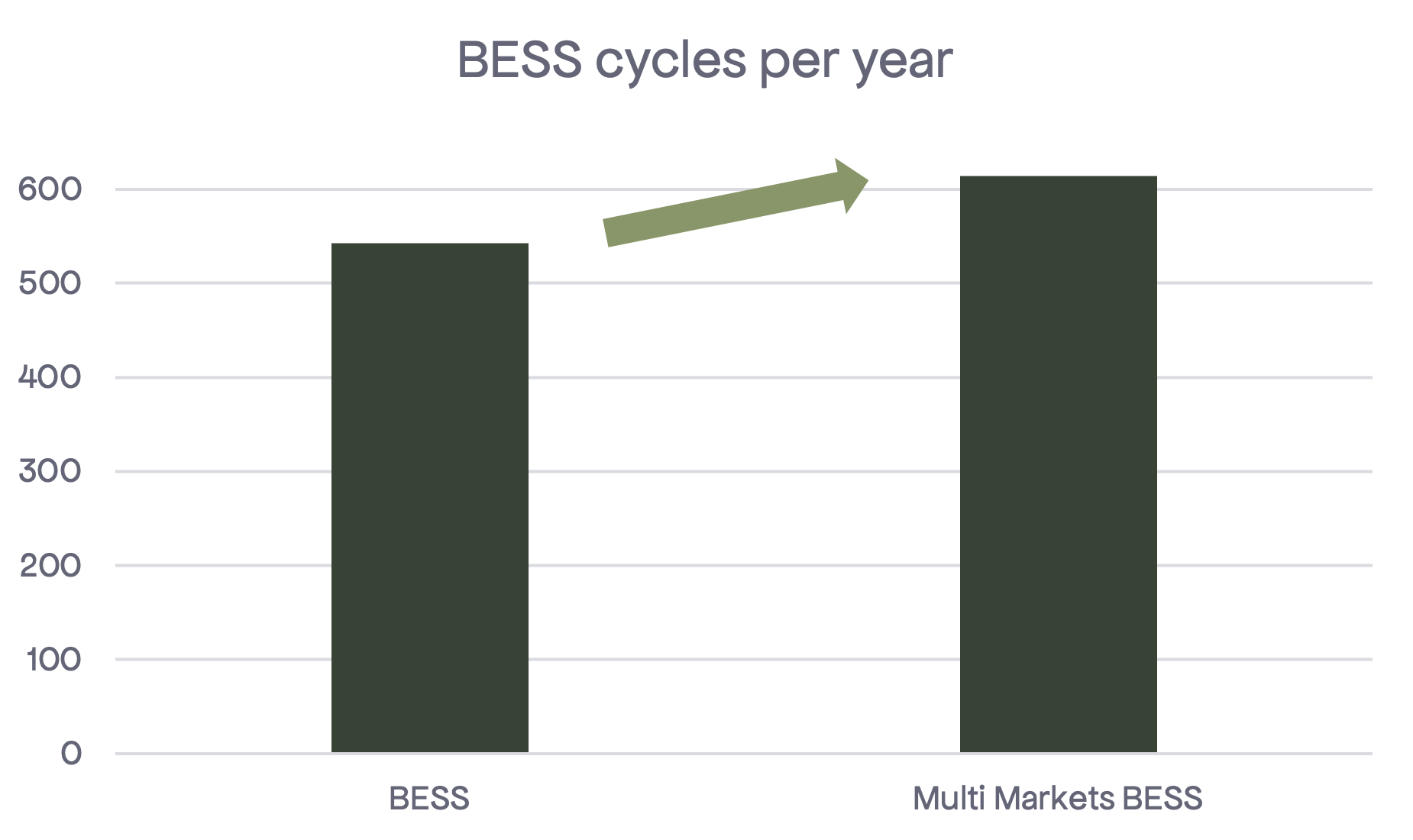
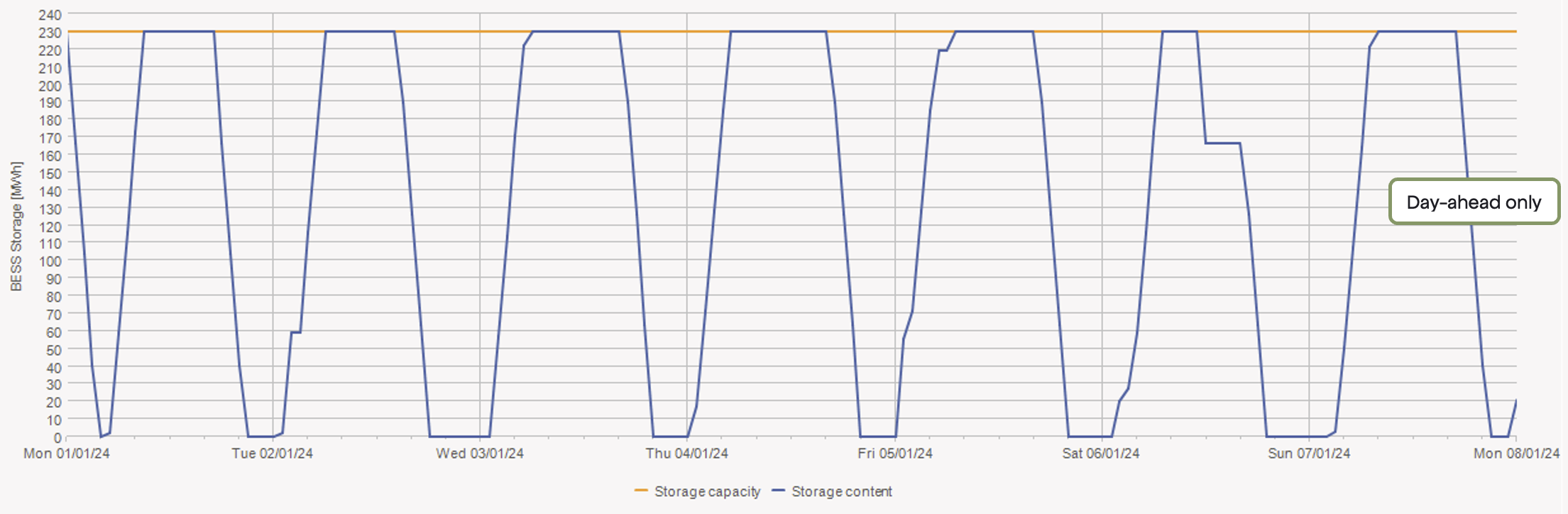
The participation in multiple markets increases the number of cycles the BESS does throughout the year:
Example of one week operation:
-1.png?width=1920&height=628&name=pictures%20(8)-1.png)
Possible further steps in the hybrid modelling
Modify the input prices and analyse the performance of the system.
Include index in prices, degradation on PV panels and BESS and perform a full-blown calculation considering 20 years of operation of the system.
Include more electricity markets.
Other BESS case studies
Discover other case studies modelled in energyPRO
1. Renewable project with limited grid connection
This scenario investigates an existing 100 MW wind farm with a grid export limit of 100 MW. Using energyPRO, the system is incrementally expanded to evaluate value creation through hybridisation and storage.
2. BESS for industrial application in India
A hybrid power system for a factory in India with a flat, 24/7 demand of 25 MW. The system includes on-site wind and solar generation, with energyPRO using real 2024 Indian spot market prices.